
Why Most Blood Sugar Supplements Don’t Work (And How to Read Labels Like a Pro)

Why Most Blood Sugar Supplements Don’t Work (And How to Read Labels Like a Pro)


Introduction: 1. Why So Many People Feel Frustrated with Blood Sugar Supplements
If you’ve ever bought a blood sugar supplement hoping it would finally help stabilise your energy, reduce cravings, or support healthier glucose levels, only to see little or no results, you are not alone.
Many people spend months trying different supplements, switching brands, and following bold marketing promises, yet still feel frustrated and disappointed. Some products look impressive online, but once they arrive, the labels are filled with confusing ingredient names, tiny serving sizes, and claims that sound too good to be true. It becomes difficult to know what actually works and what is simply clever advertising.
What makes the situation worse is the fear that blood sugar issues may continue getting worse while you waste money on ineffective products. For many people, it’s not just about supplements anymore. It’s about protecting long-term health, avoiding complications, and feeling in control again.
The truth is, many blood sugar supplements fail because consumers are often distracted by flashy packaging and exaggerated promises instead of focusing on what truly matters: the label. A product may contain popular ingredients, but if the dosage is too low or the formula lacks transparency, the supplement may not deliver meaningful support.
Most people are not choosing the wrong supplement because they are careless… they simply don’t know how to read the label.
2. The Real Reason Many Blood Sugar Supplements Fail
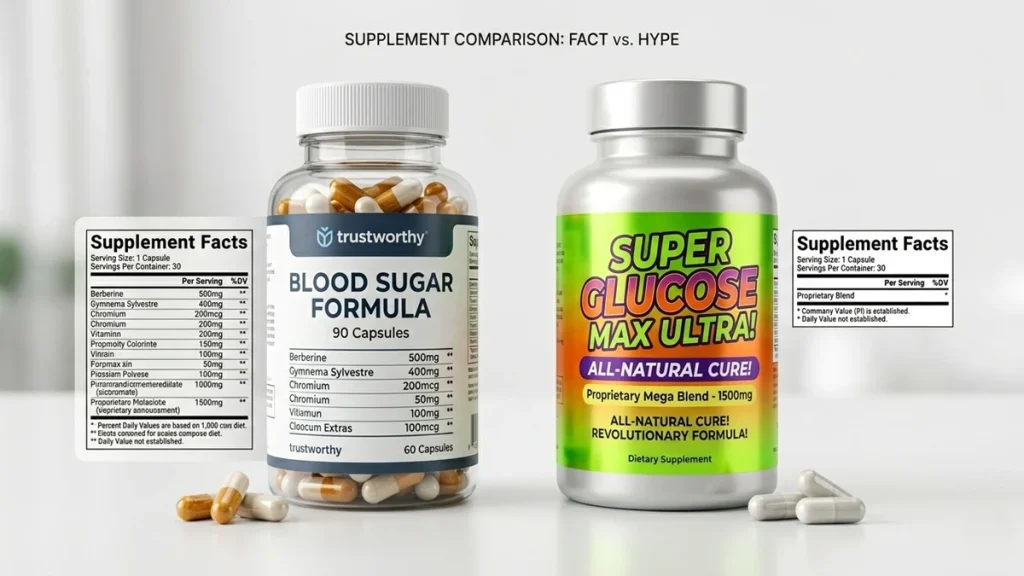
“A supplement can contain the right ingredient… but still be too weak to actually help.”
This is one of the biggest reasons so many people feel disappointed after trying blood sugar supplements. The problem is not always the ingredient itself. In many cases, the real issue is the formulation behind the product.
Some supplements include well-known blood sugar support ingredients like cinnamon extract, chromium, or berberine, but the actual amount included is far too low to make a meaningful difference. This is known as underdosing. The label may highlight powerful ingredients on the front of the bottle, but when you check the supplement facts panel closely, you may discover the dosage is minimal.
Another major problem is marketing hype. Many brands rely on emotional promises instead of scientific transparency. Phrases like “fast blood sugar support,” “miracle formula,” or “doctor-approved breakthrough” are often designed to attract desperate buyers, not educate them.
Proprietary blends create another layer of confusion. Instead of listing the exact amount of each ingredient, some companies group multiple ingredients together under one blend name. This makes it nearly impossible to know whether the product contains effective amounts or just tiny traces added for marketing purposes.
Poor ingredient combinations can also reduce effectiveness. Some formulas overload the supplement with too many ingredients that do not work well together or are included only to make the label appear more advanced.
The reality is simple: a supplement should not be judged by flashy claims or ingredient names alone. What matters most is the quality, transparency, and dosage behind the formula.
3. Why Supplement Labels Are Designed to Confuse Beginners
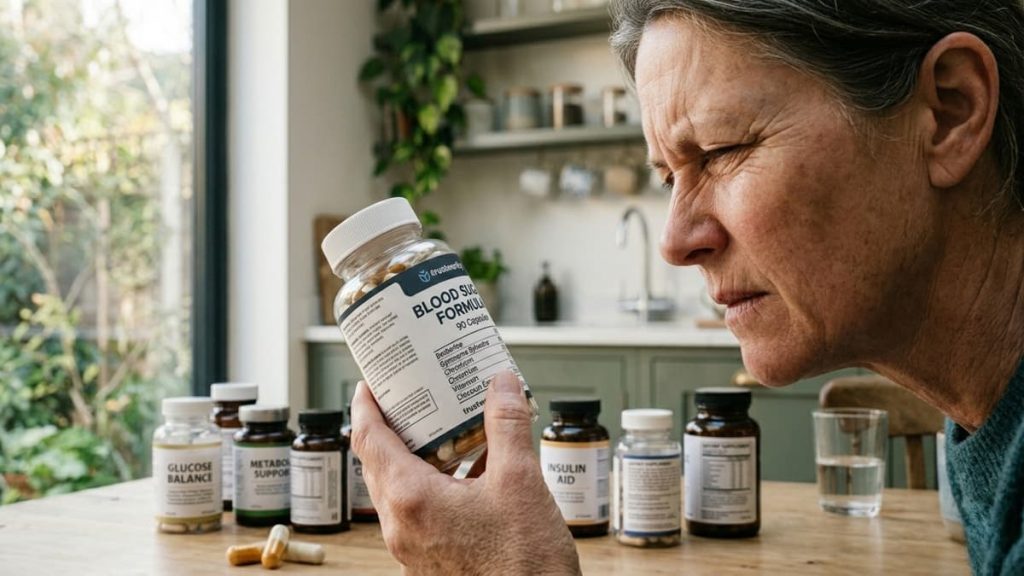
For many beginners, reading a supplement label can feel more confusing than helpful. Instead of providing clear answers, many labels are designed in ways that overwhelm buyers and shift attention toward marketing rather than transparency.
Tiny Fonts and Scientific Language
One of the first things people notice is the extremely small text used on many supplement bottles. Important details like serving size, dosage, and ingredient amounts are often difficult to read quickly. On top of that, many ingredients appear under long scientific names that sound unfamiliar to the average person. This alone can make buyers feel uncertain or intimidated.
Misleading Front Labels
The front of a supplement bottle is usually designed to sell the product emotionally. You may see bold phrases like “advanced blood sugar support,” “clinically inspired,” or “maximum strength formula.” While these claims sound impressive, they often do not reveal the actual quality or dosage of the ingredients inside.
Hidden Ingredient Amounts
Some brands intentionally hide ingredient quantities behind proprietary blends. This prevents consumers from knowing how much of each ingredient they are actually getting. A supplement may advertise powerful ingredients on the front label while including only tiny, ineffective amounts.
The “Natural” Marketing Trap
Many people automatically trust products labelled “natural.” However, natural does not always mean effective, safe, or properly dosed. Some companies use the word mainly as a marketing tactic to build trust quickly without providing real transparency.
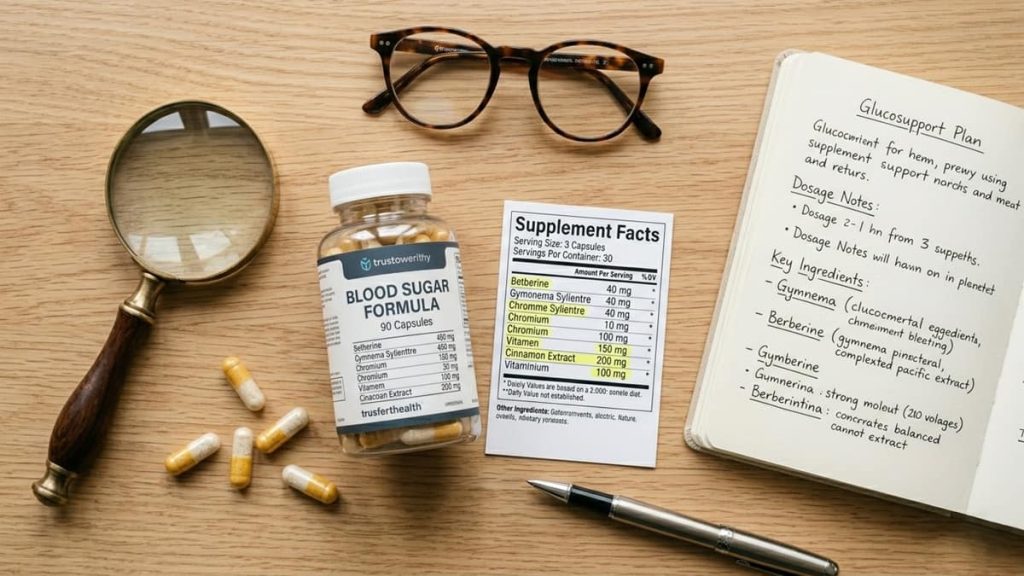
4. Step-by-Step: How to Read a Blood Sugar Supplement Label Properly
Understanding how to read a blood sugar supplement label can save you from wasting money on ineffective products. More importantly, it helps you make informed decisions based on ingredient quality, dosage, and transparency instead of marketing hype.
Once you know what to look for, supplement labels become much easier to understand.
Step 1: Check the Serving Size
The first thing you should look at is the serving size. This tells you how much of the supplement you are expected to take at one time. It may be one capsule, two capsules, one scoop, or more.
This step matters because every ingredient amount listed on the label is based on that serving size. For example, if the label says a supplement contains 500 mg of an ingredient per serving, but the serving size is actually two capsules, then you would need to take both capsules to get the full amount.
Many people overlook this detail and assume the numbers apply to a single capsule or tablet. That misunderstanding can lead to incorrect dosing and unrealistic expectations about the product’s effectiveness.
You should also check how many servings are included in the container. A supplement may appear affordable until you realise the bottle lasts only two weeks instead of a full month.
Step 2: Look for the Active Ingredients
After checking the serving size, focus on the active ingredients. These are the ingredients intended to support healthy blood sugar levels.
Some commonly discussed blood sugar support ingredients include:
- Berberine
- Chromium
- Cinnamon extract
- Alpha-lipoic acid
- Magnesium
- Bitter melon
The goal is not simply to find familiar names. You want to see whether the supplement clearly lists its ingredients in a transparent way.
Be cautious of products filled with long lists of unnecessary additives, fillers, artificial colouring, or ingredients that seem unrelated to blood sugar support. Sometimes companies overload labels to make formulas appear more advanced than they actually are.
A cleaner and more focused ingredient list is often easier to evaluate than an overly complicated formula packed with dozens of ingredients.
Step 3: Check the Dosage Amount
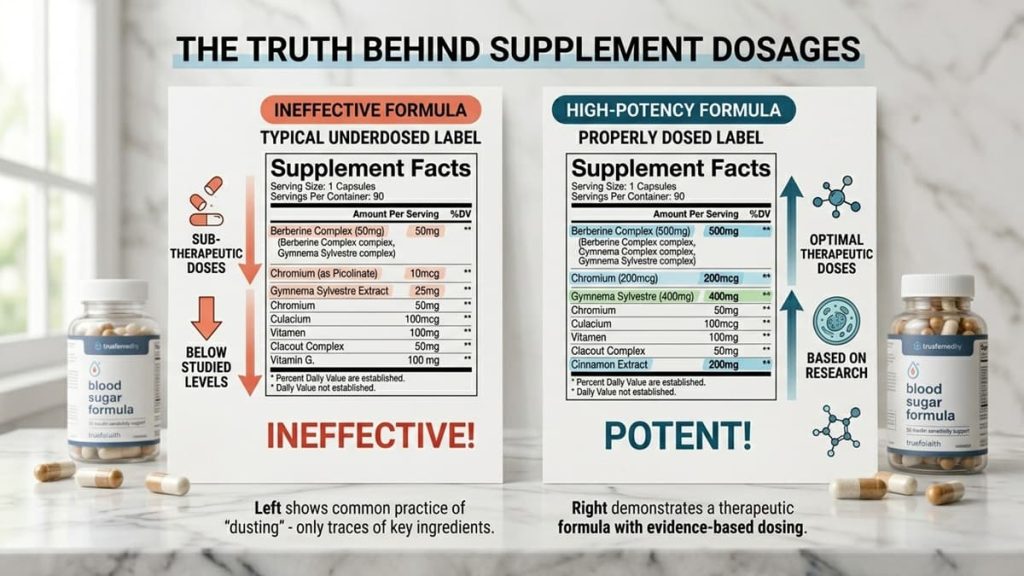
One of the most important parts of reading a supplement label is checking the dosage amount of each active ingredient.
A supplement may contain popular ingredients, but if the amounts are too small, the product may not provide meaningful support. This is one of the biggest reasons many blood sugar supplements fail to meet expectations.
For example, two supplements may both contain cinnamon extract, but one may contain a significantly higher and more useful amount per serving.
This is why you should never judge a supplement based only on the front label or ingredient names. Always check the actual quantity listed in the Supplement Facts panel.
Low-dose formulas are sometimes used to reduce manufacturing costs while still allowing companies to advertise trendy ingredients on the packaging.
The key question is not:
“Does this supplement contain the ingredient?”
Instead ask:
“Does it contain enough of the ingredient to realistically matter?”
Step 4: Understand % Daily Value (%DV)
The % Daily Value, often written as %DV, shows how much a nutrient contributes to your recommended daily intake.
This section is commonly misunderstood, but it is actually simple once you understand the basics.
As a general rule:
- 5% DV or less is considered low
- 20% DV or more is considered high
For example, if a supplement provides 100% DV of chromium, it means one serving supplies the full recommended daily intake for that nutrient.
However, more is not always better. Extremely high percentages do not automatically mean the supplement is superior. In some cases, excessive amounts may be unnecessary.
The %DV should be used as a quick reference tool, not as the only factor when evaluating a supplement.
It is also important to remember that some herbal ingredients and speciality compounds may not have an established Daily Value listed at all. That does not necessarily mean they are ineffective.
Step 5: Watch for Proprietary Blends
Proprietary blends are one of the biggest red flags on supplement labels.
A proprietary blend occurs when multiple ingredients are grouped under one blend name without revealing the exact amount of each ingredient.
For example, a label may say:
“Blood Sugar Support Blend – 1,000 mg”
Then underneath, it lists several ingredients without explaining how much of each one is included.
This lack of transparency makes it difficult to know whether the important ingredients are properly dosed or included only in tiny amounts for marketing purposes.
Companies often use proprietary blends to hide weak formulations from consumers.
Transparent supplements usually list every ingredient individually along with its exact dosage. That level of openness makes it easier to evaluate the product properly.
Step 6: Look for Third-Party Testing
Finally, check whether the supplement mentions third-party testing or quality certification.
Third-party testing means an independent organisation has evaluated the product for quality, purity, and label accuracy. This helps verify that the supplement contains what it claims and is free from harmful contaminants.
Not every trustworthy supplement will display the same certification, but some indication of testing is usually a positive sign.
A company that invests in transparency and quality testing is generally more trustworthy than one that provides little information about manufacturing standards.
At the end of the day, reading supplement labels is less about memorising scientific terms and more about learning how to spot transparency, proper dosing, and honest formulations. Once you understand these basics, you become far less vulnerable to misleading marketing and ineffective products.
5. The Best Ingredients to Look for in Blood Sugar Supplements
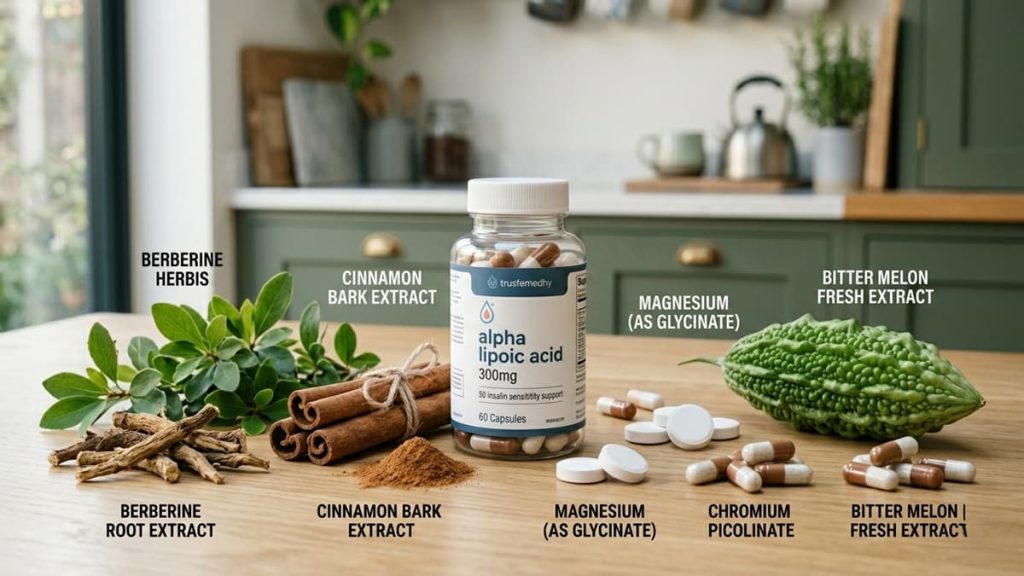
Not all blood sugar supplements are formulated the same way. While marketing claims can be misleading, certain ingredients have been commonly studied for their potential role in supporting healthy blood sugar levels and metabolic function.
Understanding these ingredients can help you make more informed supplement decisions.
Berberine
Berberine is one of the most discussed ingredients in blood sugar support supplements. It is a plant compound found in several herbs and has been widely researched for its potential effects on glucose metabolism and insulin sensitivity.
Many people look for berberine because it is often included in formulas focused on metabolic and blood sugar support. However, the dosage and formulation still matter significantly.
Chromium
Chromium is a trace mineral involved in how the body processes carbohydrates and insulin. It is commonly included in blood sugar supplements because of its role in supporting normal glucose metabolism.
You will often find chromium listed as chromium picolinate or chromium chloride on supplement labels.
Alpha Lipoic Acid (ALA)
Alpha Lipoic Acid, often shortened to ALA, is an antioxidant commonly studied for its potential role in insulin function and cellular energy production.
Some blood sugar supplements include ALA because it may help support metabolic health while also contributing to antioxidant protection within the body.
Cinnamon Extract
Cinnamon extract is another popular ingredient commonly associated with blood sugar support. Unlike regular kitchen cinnamon, supplement formulas may use concentrated extracts designed for higher potency.
Many consumers are familiar with cinnamon because of its long history in traditional wellness practices.
Magnesium and Bitter Melon
Magnesium plays an important role in several metabolic functions, including insulin activity and glucose regulation. Some people may not get enough magnesium through diet alone, which is why it is often added to supplement formulas.
Bitter melon is a plant commonly used in traditional herbal practices and is frequently included in blood sugar support blends because of its historical use related to glucose management.
When evaluating supplements, focus less on hype and more on ingredient transparency, dosage clarity, and overall formulation quality.
6. Red Flags That Should Make You Avoid a Supplement Immediately
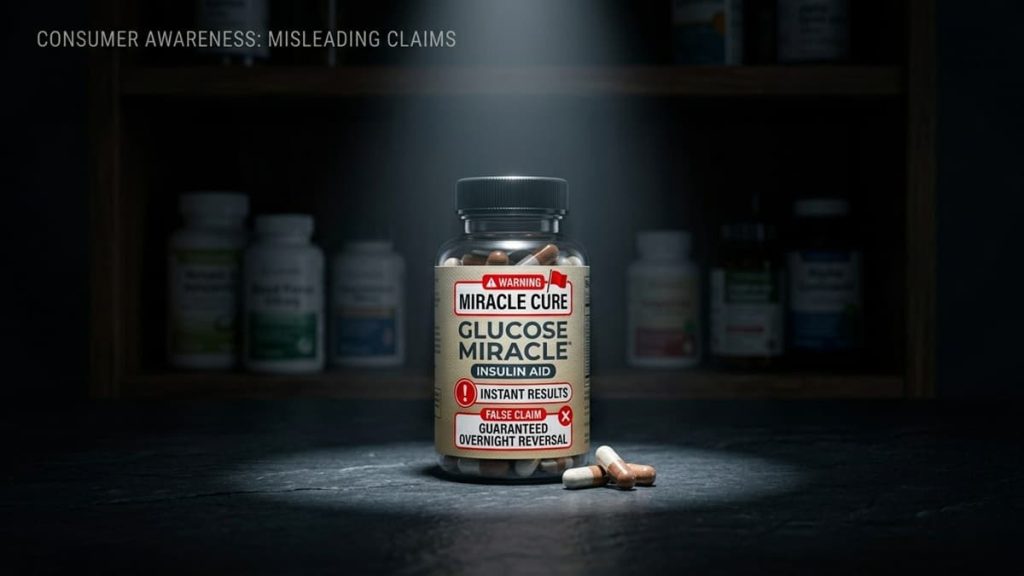
Not every blood sugar supplement on the market is worth your money. Some products rely heavily on marketing tactics while hiding important information that consumers actually need. Learning to spot red flags early can help you avoid ineffective or low-quality supplements.
Unrealistic Health Claims
One of the biggest warning signs is exaggerated language, such as:
- “miracle cure”
- “instant blood sugar fix”
- “works overnight”
- “guaranteed results”
Legitimate supplements are designed to support health, not produce unrealistic transformations within days. Overhyped promises are often used to target desperate buyers emotionally.
No Dosage Transparency
A supplement should clearly show the exact amount of every active ingredient. If the label hides ingredient quantities behind proprietary blends, it becomes difficult to know whether the formula is properly dosed or mostly marketing.
Transparency matters because even good ingredients can be ineffective when included in tiny amounts.
Extremely Long Ingredient Lists
Some products contain dozens of ingredients packed into one formula. While this may appear impressive, overly complicated blends are sometimes used to distract buyers from weak dosages or poor formulation quality.
Hidden Stimulants and No Quality Testing
Certain supplements may include hidden caffeine or stimulant-based ingredients that can affect energy levels, sleep, or heart rate without clearly emphasising it on the front label.
You should also be cautious of products with no mention of third-party testing or quality certifications. Trusted brands usually provide some level of transparency regarding purity, safety, and manufacturing standards.
In most cases, clear labels and honest formulations are far more trustworthy than flashy promises.
7. How to Compare Two Blood Sugar Supplements Like an Expert
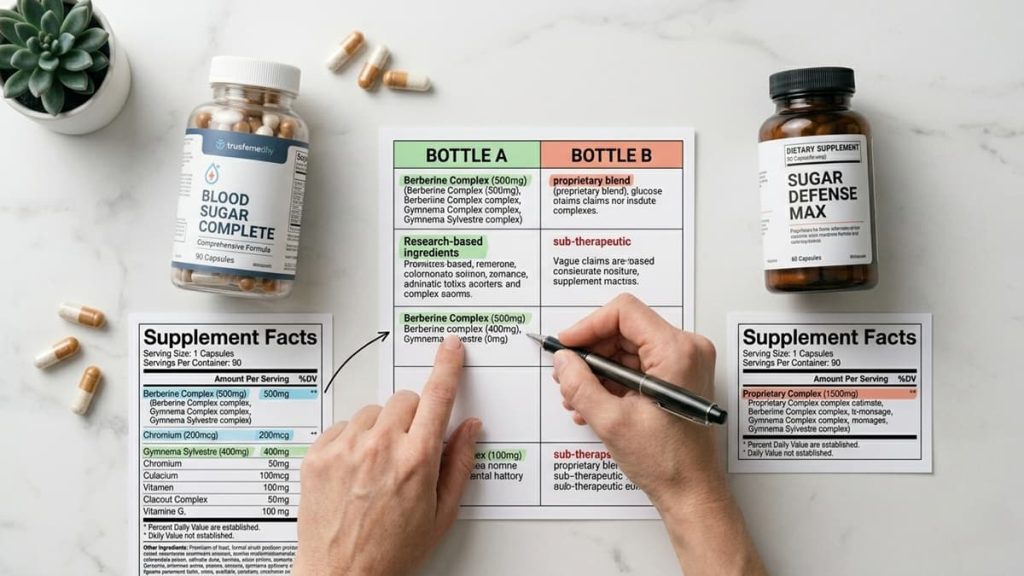
When comparing blood sugar supplements, many people focus only on the brand name or front-label claims. However, smart supplement comparisons are based on transparency, ingredient quality, and overall value, not marketing hype.
A simple comparison framework can help you evaluate products more confidently.
Step 1: Compare Ingredient Quality
Start by looking at the active ingredients used in each formula. Does the supplement contain commonly studied ingredients associated with blood sugar support, or is it filled mostly with fillers and trendy marketing ingredients?
A shorter, focused formula is often easier to evaluate than a product overloaded with unnecessary additives.
Step 2: Check the Dosage
Next, compare the dosage amounts listed in the Supplement Facts panel. Two products may contain the same ingredient, but one may provide a far more useful amount per serving.
Always focus on the actual quantity, not just the ingredient name on the front label.
Step 3: Evaluate Transparency and Certifications
A trustworthy supplement should clearly list ingredient amounts rather than hide behind proprietary blends.
Also look for signs of third-party testing, GMP manufacturing standards, or other quality certifications. These indicators can help build confidence in the product’s accuracy and safety.
Step 4: Calculate the Price Per Serving
Finally, avoid judging value by bottle price alone. A cheaper supplement may contain fewer servings or weaker dosages.
Instead, calculate the cost per serving alongside ingredient quality and transparency. This gives you a more realistic picture of overall value and helps you identify supplements that may actually be worth considering.
8. Recommended Blood Sugar Support Supplements
When evaluating blood sugar support supplements, I focus less on marketing promises and more on transparency, ingredient quality, and proper formulation. A trustworthy supplement should clearly list every active ingredient and dosage instead of hiding behind proprietary blends.
I also pay attention to whether the formula includes commonly studied ingredients such as berberine, chromium, alpha lipoic acid, cinnamon extract, or magnesium. These ingredients are frequently discussed in relation to blood sugar and metabolic support, although effectiveness can still depend on dosage, consistency, and individual health factors.
Third-party testing and manufacturing standards are also important. Supplements that provide evidence of quality testing generally offer more confidence than products with little transparency.
Different formulas may suit different people. Some individuals may prefer a simpler ingredient profile with fewer ingredients, while others may look for broader metabolic support formulas. The key is choosing products based on clear labelling and realistic expectations, not exaggerated claims.
Before buying any supplement, take time to compare ingredient quality, dosage strength, and cost per serving carefully. A well-formulated supplement is usually easier to identify when the company prioritises clarity over hype.
9. Free Checklist: What to Check Before Buying Any Supplement
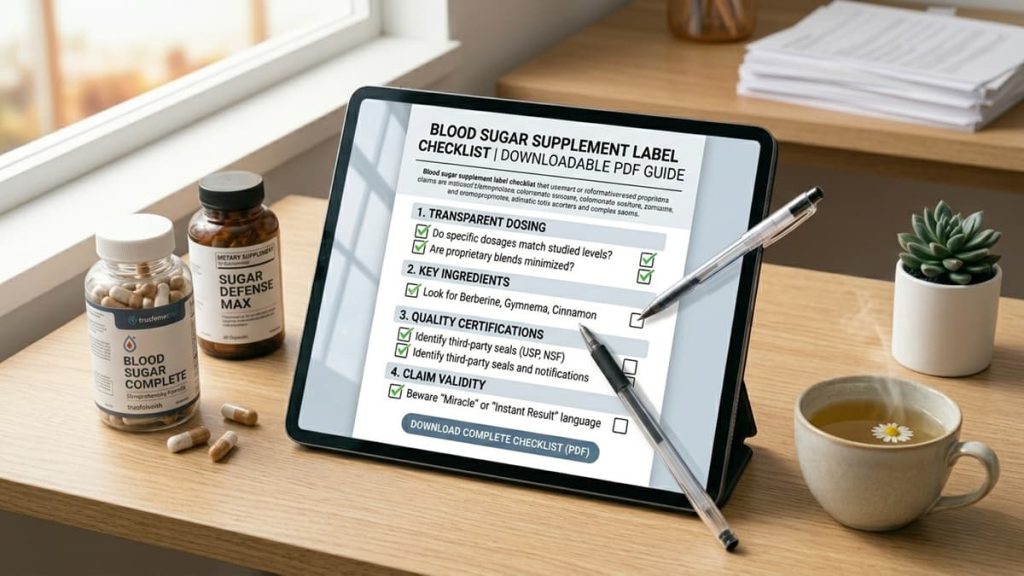
To make supplement shopping easier, I created a simple Blood Sugar Supplement Label Checklist PDF that helps you quickly evaluate products before spending your money.
Inside the checklist, you’ll learn how to:
- check serving size properly
- spot underdosed ingredients
- identify proprietary blend red flags
- understand dosage transparency
- recognize quality certifications
This quick guide is designed to help you avoid confusing labels and make smarter supplement decisions with more confidence.
Download the free checklist below and keep it handy anytime you compare blood sugar support supplements.
10. Common Mistakes People Make When Buying Supplements
One of the biggest mistakes people make when buying supplements is choosing products based purely on hype. Attractive packaging, social media ads, and exaggerated claims can easily influence buying decisions even when the formula itself is weak.
Another common mistake is ignoring dosage amounts. Many people focus only on ingredient names without checking whether the supplement contains enough of those ingredients to provide meaningful support.
Some consumers also assume that “natural” automatically means safe or effective. While natural ingredients can be beneficial, they still require proper formulation, quality control, and responsible dosing.
Taking more than the recommended amount is another problem. Some people believe higher doses will produce faster results, but this can increase the risk of side effects or unnecessary intake.
Finally, many buyers purchase supplements without researching the ingredients or understanding what they actually do. This often leads to wasted money and unrealistic expectations.
The more informed you become about labels, dosage, and ingredient transparency, the easier it becomes to avoid low-quality products and make smarter supplement decisions.

11. Final Thoughts: Smart Supplement Buyers Read Labels First
Choosing a blood sugar supplement should never be based on marketing alone. The smartest buyers focus on transparency, ingredient quality, proper dosage, and realistic expectations before making a decision.
Once you understand how to read supplement labels properly, it becomes much easier to identify products that prioritise clarity over hype. That knowledge gives you more confidence, better control, and a stronger chance of making informed health decisions.
If you want additional help, you can also download the free Blood Sugar Supplement Label Checklist PDF to simplify future comparisons. You may also find it helpful to explore related guides on blood sugar support ingredients, supplement comparisons, and common label red flags before choosing your next product.
Related posts