
Is Your Blood Sugar High? 5 Silent Signs You Might Be Ignoring

Is Your Blood Sugar High? 5 Silent Signs You Might Be Ignoring

Why So Many People Miss the Early Signs of High Blood Sugar
Many people live with high blood sugar symptoms for months, sometimes even years, without realising what their body is trying to tell them. The problem is that the early warning signs often seem harmless at first. Feeling tired after meals, craving sugary snacks, struggling with brain fog, or waking up frequently at night can easily be blamed on stress, ageing, poor sleep, or a busy lifestyle.
What makes blood sugar imbalance tricky is that the symptoms usually develop gradually. They don’t always appear suddenly or dramatically. Instead, they quietly become part of everyday life until they start affecting energy, mood, weight, focus, and overall health.
Many adults also assume blood sugar problems only affect people with diabetes. In reality, symptoms can begin long before a diagnosis ever happens. That’s why understanding these silent signs matters.
The good news is that recognising these early clues may help you take steps toward better metabolic health before the problem becomes more serious.
Silent Sign #1: — You Feel Tired Even After Sleeping

Do you wake up feeling exhausted even after getting what should have been a full night’s sleep? If so, your blood sugar levels could be playing a bigger role than you realise.
One of the most common silent signs of high blood sugar is ongoing fatigue. Many people assume they are simply overworked, stressed, or not sleeping well enough. But unstable blood sugar can seriously affect how your body produces and uses energy throughout the day.
When you eat foods high in sugar or refined carbohydrates, your blood sugar can rise quickly. Your body then releases insulin to move that glucose into your cells for energy. However, when blood sugar becomes imbalanced over time, the process may not work efficiently. Instead of steady energy, you may experience sharp spikes followed by sudden crashes that leave you feeling drained, sleepy, and mentally sluggish.
Some people notice this most strongly after meals. You eat lunch expecting energy, but instead feel like taking a nap an hour later. Others experience afternoon crashes, low motivation, or difficulty staying productive throughout the day.
Persistent fatigue is not always caused by blood sugar issues, but it is a warning sign many people overlook. If tiredness regularly appears alongside cravings, weight gain, or brain fog, it may be worth paying closer attention to your blood sugar health.
Silent Sign #2: — You Constantly Crave Sugar or Carbs

Have you ever felt like your cravings completely take over, even shortly after eating? Constant cravings for sugary snacks, soft drinks, bread, pastries, or other refined carbohydrates may be more than a simple lack of willpower. In many cases, they can be connected to unstable blood sugar levels.
When blood sugar rises quickly after eating processed or high-sugar foods, the body releases insulin to bring those levels down. But if blood sugar drops too fast afterwards, your brain may respond by demanding another quick source of energy. This cycle can create intense cravings that keep repeating throughout the day.
Many people describe it as feeling “hungry all the time” or constantly thinking about snacks. Others notice strong cravings during the afternoon or late at night when energy levels begin to crash. Over time, this blood sugar roller coaster can make healthy eating feel much harder than it should.
What makes this symptom confusing is that people often blame themselves instead of understanding the underlying imbalance. They think they simply lack discipline, when in reality, their body may be reacting to unstable glucose levels.
Frequent cravings can also appear alongside fatigue, mood swings, irritability, and difficulty concentrating. If you regularly feel trapped in a cycle of craving sugar, eating it, and then craving even more later, your blood sugar may be sending you an important warning sign.
Silent Sign #3: — You are Urinating More Often Than Usual
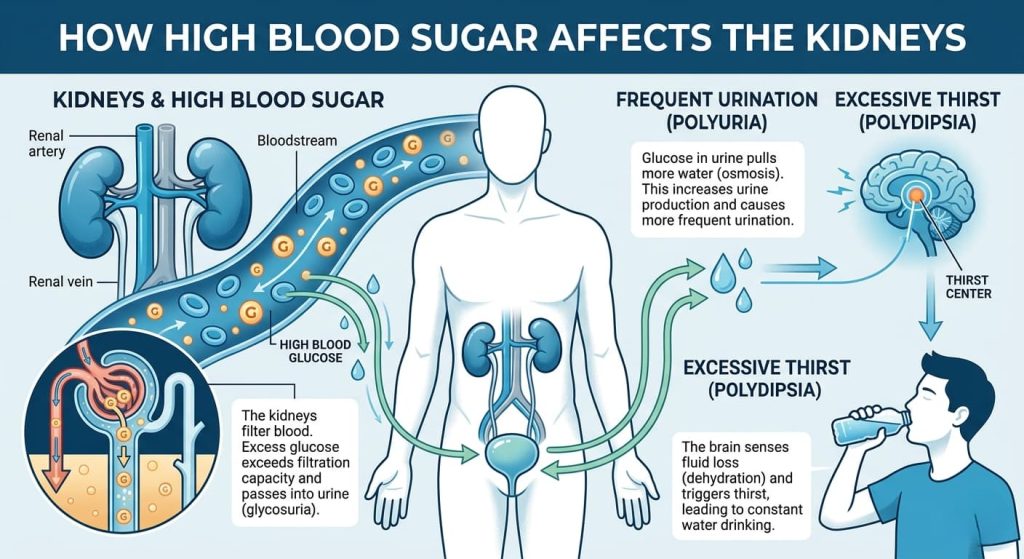
Needing to urinate more frequently, especially during the night, can sometimes be an early sign of high blood sugar. While many people blame it on drinking too much water, ageing, or even stress, persistent frequent urination may indicate that your body is struggling to regulate glucose properly.
When blood sugar levels become too high, the kidneys work harder to remove excess glucose from the bloodstream. To do this, the body pulls more water into the urine, which increases how often you need to use the bathroom. This can also lead to excessive thirst because the body is losing more fluids than normal.
Some people notice they wake up multiple times during the night to urinate. Others feel constantly thirsty no matter how much water they drink during the day. Over time, this cycle can leave you feeling dehydrated, tired, and mentally drained.
Because these symptoms often develop gradually, many people ignore them for months without realising they may be connected to blood sugar imbalance. If frequent urination appears alongside fatigue, cravings, or blurry vision, it may be worth paying closer attention to your overall metabolic health and speaking with a healthcare professional if symptoms persist.
Silent Sign #4: — Brain Fog and Difficulty Concentrating

If you have been struggling to focus, forgetting simple things, or feeling mentally “off” during the day, unstable blood sugar could be one of the hidden reasons behind it. Many people describe brain fog as feeling slow, distracted, unfocused, or mentally exhausted, even when they are trying their best to stay productive.
Your brain depends heavily on a steady supply of glucose for energy. When blood sugar rises too high or crashes too quickly, it can affect mental clarity, concentration, mood, and memory. Some people notice this after eating sugary meals or refined carbohydrates that cause rapid spikes and drops in energy levels.
Brain fog related to blood sugar imbalance may show up as difficulty concentrating at work, forgetting tasks, struggling to find words during conversations, or feeling unusually irritable and mentally drained throughout the day. These symptoms are often mistaken for stress, lack of sleep, or simply being too busy.
Because brain fog develops gradually, many people never connect it to their eating habits or metabolic health. However, when poor focus appears together with fatigue, cravings, or weight gain, it may be a sign that your blood sugar levels are not as stable as they should be.
Silent Sign #5: — You are Gaining Weight Around the Belly

Stubborn weight gain around the stomach is another silent sign that may be linked to blood sugar imbalance. Many people notice that no matter how hard they try to eat less or exercise more, belly fat seems unusually difficult to lose. In some cases, unstable blood sugar and insulin resistance may be part of the reason.
When you regularly consume large amounts of sugar and refined carbohydrates, your body releases insulin to help move glucose out of the bloodstream. Over time, constantly elevated insulin levels may encourage the body to store more fat, especially around the abdominal area. This is why belly weight gain is often associated with metabolic health problems.
What makes this frustrating is that people often blame themselves for lacking discipline or motivation. But blood sugar imbalance can increase hunger, cravings, and energy crashes, making healthy habits harder to maintain consistently.
Some people also notice they feel hungry again shortly after meals, particularly after eating highly processed foods. This can lead to overeating and frequent snacking throughout the day, which may further worsen the cycle.
Belly fat alone does not automatically mean someone has high blood sugar. However, when weight gain appears alongside fatigue, cravings, brain fog, or frequent urination, it may be a sign that the body is struggling to manage glucose effectively.
Why Most People Ignore These Symptoms Until Things Get Worse

One reason blood sugar problems often go unnoticed is that the symptoms can feel surprisingly ordinary. Fatigue gets blamed on a busy schedule. Cravings are dismissed as poor self-control. Brain fog is often linked to stress, while weight gain is commonly seen as a normal part of ageing.
Because these signs develop slowly, many people adapt to them without realising their body may be struggling internally. What starts as occasional tiredness or late-night cravings can gradually become an everyday experience. Over time, the body’s warning signals begin to feel “normal,” even when they are not.
Another reason people ignore these symptoms is that they may not associate them with blood sugar at all. Many assume blood sugar issues only affect people who already have diabetes. In reality, symptoms can begin long before a diagnosis is ever made.
The challenge is that early blood sugar imbalance often stays hidden until more serious health problems appear. That’s why paying attention to these subtle warning signs matters. Recognising them early may help you make healthier lifestyle choices before the situation becomes more difficult to manage.
Simple Lifestyle Changes That Support Healthy Blood Sugar

The good news is that small daily habits can make a meaningful difference in supporting healthy blood sugar levels. You do not need a perfect diet or extreme lifestyle to start improving your metabolic health. In many cases, consistent, simple changes are more effective and easier to maintain long-term.
Eat More Protein and Fibre
One of the easiest ways to support stable blood sugar is by building meals around protein and fibre-rich foods. Protein may help you stay full longer, while fibre slows down how quickly sugar enters the bloodstream.
Foods like eggs, fish, beans, vegetables, nuts, and seeds can help reduce rapid glucose spikes after meals. Replacing highly processed snacks with balanced meals may also help reduce cravings and energy crashes during the day.
Reduce Sugary Drinks and Refined Carbohydrates
Soft drinks, sugary coffee drinks, pastries, white bread, and heavily processed snacks can cause blood sugar to rise quickly. While occasional treats are normal, regularly consuming large amounts of refined sugar may increase glucose fluctuations.
Instead of eliminating everything at once, focus on gradual improvements. Drinking more water, choosing whole foods more often, and reducing heavily processed snacks can help create more stable energy levels throughout the day.
Walk After Meals

Light movement after eating is a simple habit many people overlook. A short walk after meals may help the body use glucose more efficiently while also supporting digestion and energy levels.
Even 10 to 15 minutes of walking after lunch or dinner can be a practical starting point for people with busy schedules.
Improve Sleep Quality
Poor sleep and blood sugar imbalance often affect each other in both directions. Inadequate sleep may increase cravings, hunger hormones, fatigue, and difficulty managing healthy habits during the day.
Creating a more consistent sleep routine, reducing screen time before bed, and improving sleep quality may positively support overall metabolic health.
Manage Stress Levels
Chronic stress can influence hormones that affect blood sugar regulation. Many people notice stronger cravings, emotional eating, and fatigue during stressful periods.
Simple stress-management habits such as deep breathing, prayer, stretching, journaling, or regular physical activity may help support both mental and physical well-being.
Focus on Progress, Not Perfection
Many people give up because they feel they must change everything overnight. But sustainable improvement usually comes from small, consistent actions repeated daily.
Healthy blood sugar support is not about extreme restriction. It is about building habits that help your body function more efficiently over time. Even small improvements in food choices, movement, sleep, and stress management may help support better energy, fewer cravings, and improved overall wellness.
Why Some Blood Sugar Supplements Don’t Work

Many people turn to blood sugar supplements hoping for quick results, especially after struggling with fatigue, cravings, weight gain, or unstable energy for a long time. Unfortunately, not all supplements are created with quality, effectiveness, or proper ingredient transparency in mind.
One major problem is that some products rely more on marketing promises than meaningful formulation. Labels may contain long lists of trendy ingredients, but the actual amounts included are sometimes too low to provide noticeable support. In other cases, companies use proprietary blends that hide ingredient dosages completely, making it difficult for consumers to know what they are truly taking.
Another issue is unrealistic expectations. Some people expect supplements to cancel out poor sleep, excessive sugar intake, chronic stress, or lack of physical activity. While certain ingredients may help support healthy blood sugar levels, supplements usually work best when combined with healthy lifestyle habits.
Confusing advertising can also make things worse. Many products promise “instant results” or dramatic changes within days, which can lead to disappointment and wasted money.
This is why education matters before purchasing any blood sugar support product. Understanding ingredient quality, dosage transparency, and overall lifestyle habits can help people make more informed decisions instead of relying purely on marketing claims. A good supplement should support healthy habits, not replace them.
What to Look for in a Quality Blood Sugar Support Supplement
Choosing a blood sugar support supplement can feel overwhelming because so many products make similar promises. Instead of focusing on flashy marketing claims, it is better to pay attention to ingredient quality, transparency, and overall formulation.
One important thing to look for is clinically studied ingredients. Some supplements include ingredients that have been researched for their potential role in supporting healthy glucose metabolism, energy balance, or insulin function. Products that clearly explain why specific ingredients are included often appear more trustworthy than those relying only on vague promises.
It is also wise to avoid supplements that hide everything inside proprietary blends. When companies do not disclose ingredient dosages, consumers cannot easily evaluate what they are actually taking. Transparent labelling helps you make more informed decisions.
Third-party testing is another factor worth considering. Quality testing may help confirm product purity, safety, and consistency.
At the same time, remember that even high-quality supplements are not magic solutions. Healthy eating, movement, sleep, hydration, and stress management still play major roles in blood sugar balance.
A well-formulated supplement should be viewed as part of a broader wellness strategy, not a replacement for healthy daily habits or professional medical advice when needed.
Common Myths About High Blood Sugar
Many people misunderstand blood sugar problems because of common myths shared online and through everyday conversations. Unfortunately, these misconceptions can cause people to ignore important warning signs for far too long.
“Only Overweight People Have Blood Sugar Problems”
While excess body weight can increase the risk of blood sugar imbalance, it is not the only factor involved. Some people who appear slim or physically healthy may still experience unstable blood sugar levels, especially if they have poor eating habits, chronic stress, lack of sleep, or a family history of diabetes.
“Sugar Alone Causes Diabetes”
Sugar is not the only cause of blood sugar problems. Overall lifestyle habits matter too. Physical inactivity, excessive processed foods, poor sleep, stress, and genetics can all play important roles in metabolic health.
“No Symptoms Means No Problem”
One of the biggest myths is believing that blood sugar issues always produce obvious symptoms. In reality, many people experience mild or silent symptoms for years without realising it. That is why regular health checkups and paying attention to subtle warning signs can be so important for long-term wellness.
When You Should Talk to a Healthcare Professional
While lifestyle changes can support healthy blood sugar levels, it is important to recognise when professional medical advice may be necessary. If symptoms such as constant fatigue, excessive thirst, frequent urination, blurry vision, unexplained weight changes, or intense cravings continue for weeks or become more severe, it may be time to speak with a healthcare professional.
Simple blood tests can help evaluate blood sugar levels and identify possible issues early. Detecting problems sooner may help reduce the risk of more serious complications later.
It is especially important to seek medical attention if symptoms begin interfering with daily life or if you have additional risk factors such as a family history of diabetes, high blood pressure, obesity, or low physical activity.
This article is for educational purposes only and should not replace professional medical advice, diagnosis, or treatment.

Finally, don’t Ignore What Your Body Is Trying to Tell You
Your body often gives small warning signs before bigger health problems develop. Persistent fatigue, constant cravings, brain fog, frequent urination, and stubborn belly weight gain may seem unrelated at first, but together they can point toward blood sugar imbalance that deserves attention.
The encouraging news is that small daily changes can make a meaningful difference over time. Improving food choices, staying active, sleeping better, managing stress, and becoming more aware of your symptoms may help support healthier blood sugar levels and overall wellness.
You do not need to become perfect overnight. Consistent habits usually matter more than extreme short-term changes.
If several of these symptoms sound familiar, consider using them as motivation to learn more about your metabolic health and take proactive steps early. Paying attention now may help you avoid more serious health challenges in the future.
Frequently Asked Questions About High Blood Sugar
Early signs of high blood sugar can appear gradually and are often easy to ignore. Common symptoms may include constant fatigue, increased thirst, frequent urination, sugar cravings, brain fog, blurry vision, and unexplained weight changes. Some people also notice energy crashes after meals or difficulty concentrating during the day.
Yes, unstable blood sugar levels can affect how the body produces and uses energy. When glucose is not efficiently used by the cells, many people experience fatigue, sluggishness, and low energy throughout the day. Blood sugar spikes followed by rapid crashes may also contribute to tiredness after eating.
When blood sugar rises quickly and then drops suddenly, the body may crave fast sources of energy such as sugary foods or refined carbohydrates. This cycle can lead to repeated cravings, overeating, and energy fluctuations during the day.
Yes, some people with prediabetes experience symptoms such as fatigue, cravings, increased hunger, frequent urination, and difficulty concentrating. However, others may have no obvious symptoms at all, which is why regular health checkups can be important.
Balanced meals that include protein, healthy fats, fibre-rich vegetables, legumes, nuts, seeds, and whole foods may help support more stable blood sugar levels. Reducing heavily processed foods and sugary drinks may also help improve energy balance.
Common signs may include frequent energy crashes, constant hunger, sugar cravings, irritability, brain fog, excessive thirst, or feeling sleepy after meals. A healthcare professional can perform tests to more accurately evaluate your blood sugar levels.
Yes, chronic stress can affect hormones involved in blood sugar regulation. Some people notice stronger cravings, emotional eating, poor sleep, and energy imbalances during stressful periods.
Related posts