
Brain Fog and Fatigue After Eating? The Hidden Blood Sugar Spikes That May Signal Prediabetes or Insulin Resistance

Brain Fog and Fatigue After Eating? The Hidden Blood Sugar Spikes That May Signal Prediabetes or Insulin Resistance

You finish a meal expecting to feel energised, but instead, your brain feels foggy, your body feels heavy, and suddenly, all you want is another coffee or something sweet.
If this sounds familiar, you are not alone.
Many people dealing with blood sugar spikes experience symptoms that don’t immediately seem connected to glucose levels at all. Things like afternoon fatigue, mental sluggishness, irritability, intense sugar cravings, and difficulty concentrating are often brushed off as stress, poor sleep, or simply “getting older.” But in many cases, unstable blood sugar may be playing a much bigger role than people realise.
The tricky part is that blood sugar issues don’t always start with obvious warning signs. Long before someone is diagnosed with prediabetes or Type 2 diabetes, the body can begin showing subtle symptoms of insulin resistance and poor glucose control. Unfortunately, these symptoms are easy to ignore, especially when conflicting health advice and failed diets leave people feeling frustrated and overwhelmed.
The good news is that understanding what causes blood sugar spikes can be a powerful first step toward feeling better. Small daily changes in food choices, movement, sleep, and metabolic health support can often make a noticeable difference in energy, focus, and cravings.
In this guide, we will break down the surprising connection among brain fog, fatigue, and blood sugar instability, and explore practical ways to stabilise your energy naturally.
What Are Blood Sugar Spikes?
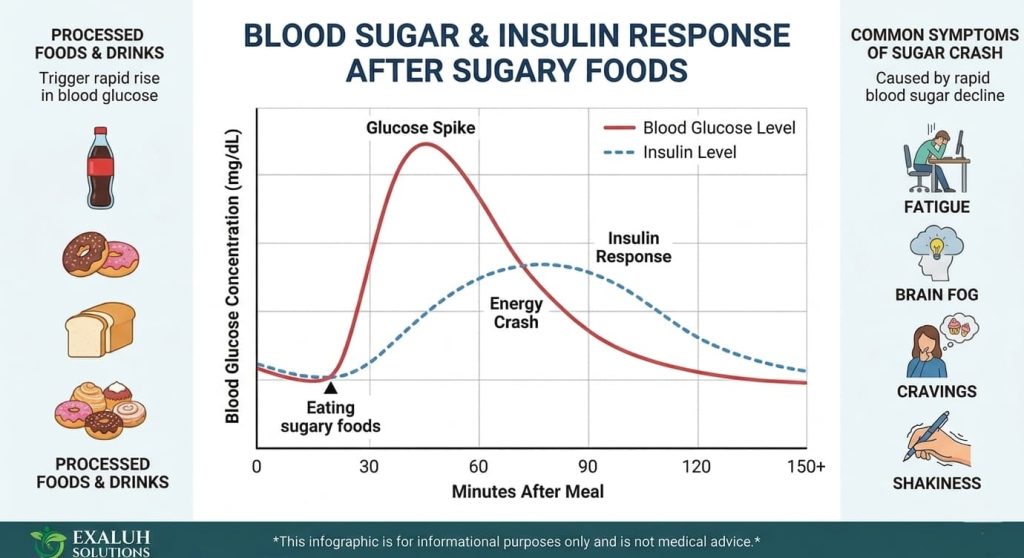
Blood sugar spikes happen when glucose levels in your bloodstream rise too quickly after eating, especially after meals high in refined carbohydrates, sugar, or heavily processed foods. While some increase in blood sugar is completely normal after eating, frequent sharp spikes followed by crashes can leave you feeling exhausted, hungry, foggy, and emotionally drained.
For many people, these ups and downs become part of daily life without ever realizing blood sugar instability may be involved.
What Happens When Glucose Rises Too Quickly
When you eat foods that break down rapidly into sugar, like pastries, soda, white bread, sugary coffee drinks, or even certain “healthy” cereals, glucose enters the bloodstream quickly. Your body responds by releasing insulin, a hormone that helps move glucose from the blood into your cells for energy.
But when blood sugar rises too fast, the body sometimes releases more insulin than necessary. This can lead to a rapid drop in blood sugar afterwards, often called a “crash.”
That crash is where many common symptoms begin:
- brain fog
- shakiness
- fatigue
- cravings
- irritability
- trouble concentrating
- feeling sleepy after meals
This cycle can repeat throughout the day, especially when meals are built around fast-digesting carbs without enough protein, fibre, or healthy fats.
How Insulin Works in Simple Terms
Think of insulin like a key. Its job is to unlock your cells so glucose can enter and be used as fuel.
Over time, however, constantly elevated blood sugar may cause cells to become less responsive to insulin, a condition known as insulin resistance. When this happens, the body has to produce more and more insulin just to keep blood sugar under control.
This is one reason people with insulin resistance often feel tired even after eating. The body is working harder to manage glucose, yet energy levels still feel unstable.
Why Repeated Spikes Can Affect Energy and Mental Clarity
Your brain depends heavily on stable glucose levels to function properly. When blood sugar swings dramatically, mental clarity and energy can suffer.
Research increasingly shows that unstable blood sugar may contribute to:
- mental fatigue
- poor focus
- mood changes
- increased hunger
- inflammation
- stronger sugar cravings
Over time, repeated glucose spikes may also increase the risk of prediabetes, metabolic dysfunction, and Type 2 diabetes, especially when combined with chronic stress, poor sleep, and sedentary habits.
The encouraging part is that even small changes to daily habits can help smooth out these blood sugar swings and support more stable energy throughout the day.
Why Blood Sugar Spikes Can Cause Brain Fog and Fatigue

If you have ever felt unusually tired, unfocused, or irritable after eating, your blood sugar may be affecting your brain and energy levels more than you realise.
Many people think of blood sugar problems as something that only matters for diabetes. But even before a diagnosis happens, unstable glucose levels can affect how you feel day to day. In fact, frequent blood sugar spikes and crashes are one of the most overlooked causes of brain fog, afternoon fatigue, and constant cravings.
The body works best when glucose levels stay relatively steady. When blood sugar rises sharply and then drops quickly, it creates a stressful cycle that can leave both your brain and body struggling to keep up.
The Energy Crash Effect
After eating a high-sugar or high-refined-carb meal, blood glucose can rise rapidly. In response, the body releases insulin to help bring those levels back down.
Sometimes blood sugar drops too quickly afterwards, leading to what many people describe as an “energy crash.” This is the moment when you suddenly feel sleepy, sluggish, shaky, or mentally drained, even if you ate recently.
These crashes can trigger:
- afternoon tiredness
- low motivation
- difficulty concentrating
- headaches
- irritability
- intense cravings for more sugar or caffeine
Unfortunately, many people respond by reaching for another sugary snack or energy drink, which can restart the cycle all over again.
Inflammation and Cognitive Function
Blood sugar instability may also affect the brain through inflammation.
Frequent glucose spikes can increase oxidative stress and inflammatory activity in the body. Over time, this may interfere with cognitive performance, memory, focus, and mental clarity.
This is one reason some people with insulin resistance describe feeling:
- mentally “slow”
- unfocused during meetings
- forgetful
- overwhelmed by simple tasks
- exhausted despite getting enough sleep
While occasional fatigue is normal, persistent brain fog paired with cravings and energy crashes may signal that the body is struggling with glucose regulation.
Stress Hormones and Glucose Swings
Blood sugar and stress hormones are closely connected.
When blood sugar drops quickly after a spike, the body may release stress hormones like cortisol and adrenaline to help stabilise glucose levels. While this response is meant to protect you, it can also leave you feeling anxious, jittery, restless, or emotionally overwhelmed.
Chronic stress can make the problem even worse by increasing insulin resistance and encouraging stronger cravings for fast energy foods.
This creates a frustrating loop:
- stress increases cravings
- cravings lead to blood sugar spikes
- spikes trigger crashes
- crashes increase fatigue and stress
Over time, this cycle can become physically and emotionally exhausting.
Why Cravings Often Follow Blood Sugar Crashes
One of the clearest signs of unstable blood sugar is intense cravings shortly after eating.
When glucose levels crash, the brain looks for a quick source of energy, and it’s usually sugar or refined carbohydrates. This is why many people feel trapped in a constant cycle of:
- eating
- crashing
- craving
- repeating
The encouraging news is that stabilising blood sugar often helps improve more than just physical energy. Many people also notice better focus, fewer cravings, steadier moods, and more consistent energy throughout the day once those extreme glucose swings begin to calm down.
Common Symptoms of Unstable Blood Sugar Most People Ignore
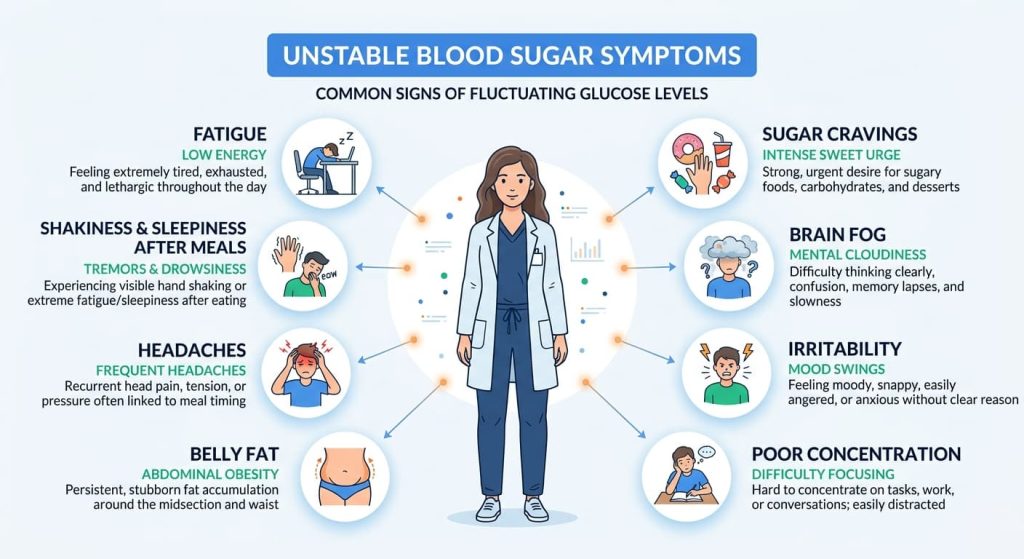
Blood sugar problems don’t always appear in obvious ways.
Many people assume symptoms like fatigue, cravings, poor concentration, or irritability are simply caused by stress, ageing, lack of sleep, or a busy lifestyle. But in reality, these everyday struggles can sometimes be early signs of blood sugar instability or insulin resistance developing behind the scenes.
Because the symptoms often come and go, they are easy to dismiss, especially when they haven’t yet progressed into diagnosed prediabetes or Type 2 diabetes.
Everyday Symptoms That May Be Connected to Blood Sugar Swings
When glucose levels rise and fall too dramatically throughout the day, the body can respond in ways that affect both physical and mental energy.
Some of the most commonly overlooked symptoms include:
- afternoon sleepiness
- brain fog
- shakiness between meals
- irritability or mood swings
- headaches
- intense sugar cravings
- difficulty concentrating
- waking up tired even after sleeping
- feeling hungry shortly after eating
- low energy after meals
- nighttime snacking urges
- stubborn weight gain around the midsection
Many people experience several of these symptoms daily without realising unstable blood sugar may be contributing to the problem.
When Symptoms May Point Toward Insulin Resistance
Occasional fatigue or cravings are normal. But when these issues become frequent, intense, or disruptive, it may be worth paying closer attention to metabolic health.
Insulin resistance often develops gradually over time. Early warning signs can include:
- constantly feeling tired
- relying heavily on caffeine or sugar for energy
- stronger cravings for carbs
- difficulty losing weight
- increased belly fat
- energy crashes after eating
Because insulin resistance can exist for years before diabetes develops, recognising these patterns early may help people make supportive lifestyle changes sooner.
When to Speak With a Healthcare Provider
Persistent fatigue, recurring brain fog, excessive thirst, frequent urination, blurred vision, or worsening cravings shouldn’t be ignored.
While symptoms alone can’t diagnose a blood sugar condition, a healthcare provider can evaluate factors like fasting glucose, A1C, insulin levels, and overall metabolic health.
The important thing to remember is that many blood sugar-related symptoms improve significantly when glucose levels become more stable. Even small changes in nutrition, movement, sleep, and stress management can often make a meaningful difference over time.
The Hidden Connection Between Prediabetes and Everyday Fatigue

One of the most frustrating things about prediabetes is that many people don’t realise they have it.
The symptoms often develop slowly and can feel vague at first: low energy, brain fog, increased cravings, poor sleep, or feeling exhausted after meals. Because these issues are so common, they are frequently blamed on stress, ageing, burnout, or a hectic schedule instead of a possible blood sugar imbalance.
But for many people, persistent fatigue may be one of the earliest warning signs that the body is struggling to regulate glucose efficiently.
Why Many People Don’t Realise Blood Sugar Is Involved
Prediabetes doesn’t usually appear overnight. Blood sugar levels can remain mildly elevated for years before reaching diabetic ranges, and during that time, the body may already be working harder to manage insulin and glucose.
The challenge is that symptoms can feel inconsistent. Some days energy seems normal, while other days bring:
- afternoon crashes
- heavy fatigue after eating
- trouble focusing
- irritability
- strong cravings for sweets or carbs
Because these symptoms overlap with so many other health concerns, blood sugar issues often go unnoticed until routine lab work reveals a problem.
How Insulin Resistance Develops Slowly
Insulin resistance happens when cells become less responsive to insulin over time. As a result, the body produces more insulin to keep blood sugar levels stable.
In the early stages, this extra effort may temporarily keep glucose levels within a “normal” range, but energy, hunger signals, and cravings can still become disrupted.
This is one reason people with insulin resistance often feel tired despite eating regularly. The body may have plenty of glucose available, but cells are not using it efficiently.
Over time, untreated insulin resistance may increase the risk of:
- prediabetes
- Type 2 diabetes
- weight gain
- metabolic syndrome
- cardiovascular problems
Why “Normal” Labs May Not Tell the Full Story
Many people are surprised to learn they can experience symptoms of unstable blood sugar even when standard lab results appear borderline or “normal.”
That’s because insulin resistance often develops long before glucose reaches diabetic levels. Looking at trends over time, along with symptoms, lifestyle habits, waist circumference, sleep quality, and family history, can sometimes provide a more complete picture of metabolic health.
The encouraging news is that prediabetes and insulin resistance often respond well to early lifestyle changes. Improving nutrition, increasing movement, managing stress, prioritising sleep, and supporting healthy blood sugar habits can make a meaningful difference before more serious complications develop.

7 Practical Ways to Reduce Blood Sugar Spikes Naturally
The good news about blood sugar health is that small daily habits can often make a surprisingly big difference.
You don’t need a perfect diet or extreme lifestyle overhaul to begin improving energy, reducing cravings, and supporting healthier glucose levels. In many cases, consistent, realistic changes work better than short-term “quick fixes” that are difficult to maintain.
If you regularly deal with fatigue, brain fog, or energy crashes after meals, these simple strategies may help stabilise blood sugar naturally and support better metabolic health over time.
1. Prioritise Protein at Breakfast
Starting the day with a high-sugar breakfast like pastries, sweet cereal, or sugary coffee drinks can trigger a rapid blood sugar spike followed by an early crash.
Adding more protein in the morning may help slow glucose absorption and improve satiety throughout the day.
Simple options include:
- eggs
- Greek yogurt
- cottage cheese
- protein smoothies
- nuts and seeds
- high-protein oatmeal combinations
Many people notice fewer cravings and steadier energy when breakfast contains a balance of protein, fibre, and healthy fats.
2. Walk After Meals
One of the easiest ways to support blood sugar balance is to take a short walk after eating.
Even 10 to 15 minutes of light movement may help muscles use glucose more efficiently, which can reduce post-meal blood sugar spikes.
This doesn’t need to be intense exercise. A gentle walk around the neighbourhood, office, or home can still be beneficial.
3. Reduce Ultra-Processed Carbohydrates
Highly processed foods are often digested quickly, causing glucose levels to rise rapidly.
Foods that commonly contribute to larger blood sugar spikes include:
- sugary drinks
- white bread
- candy
- chips
- desserts
- fast food
- heavily processed snacks
Instead of eliminating carbs completely, many people benefit from choosing slower-digesting options like:
- oats
- beans
- lentils
- vegetables
- berries
- whole grains
Pairing carbohydrates with protein or fibre may also help reduce glucose swings.
4. Improve Sleep Quality
Poor sleep and blood sugar problems are closely connected.
Research suggests that inadequate sleep may worsen insulin resistance, increase cravings, and disrupt hunger hormones. Even a few nights of poor sleep can leave people feeling hungrier and more fatigued the next day.
Helpful habits may include:
- maintaining a consistent sleep schedule
- limiting screens before bed
- reducing late-night sugar intake
- managing stress levels
Better sleep often supports better energy and glucose control simultaneously.
5. Add More Fibre
Fibre slows digestion and helps glucose enter the bloodstream more gradually.
High-fibre foods may help reduce sharp blood sugar spikes while also improving fullness and digestive health.
Good sources include:
- vegetables
- chia seeds
- flaxseeds
- legumes
- berries
- avocados
- whole grains
Some people also choose fibre supplements as part of a broader blood sugar support plan, especially when daily intake is low.
6. Manage Stress Hormones
Chronic stress can make blood sugar regulation more difficult by increasing cortisol levels and encouraging emotional eating or sugar cravings.
While stress can’t always be avoided, small habits may help lower its impact:
- walking outdoors
- breathing exercises
- strength training
- journaling
- mindfulness practices
- improving work-life balance
Reducing stress often helps improve both mental clarity and metabolic health.
7. Consider Targeted Blood Sugar Support Supplements
Lifestyle habits should always be the foundation of blood sugar management, but some people also explore supplements designed to support healthy glucose metabolism.
Common ingredients often discussed in blood sugar support products include:
- berberine
- magnesium
- chromium
- alpha-lipoic acid
- cinnamon extract
- fibre blends
While supplements are not a replacement for medical care or healthy habits, some individuals find them helpful alongside nutrition and lifestyle changes.
The most important thing is consistency. Small improvements repeated daily can gradually help stabilise blood sugar, improve focus, reduce cravings, and support more steady energy throughout the day.
Foods That May Help Stabilise Blood Sugar and Energy

What you eat can have a major impact on how stable your energy feels throughout the day.
Some foods digest quickly and lead to rapid glucose spikes followed by crashes, while others help slow digestion and provide more steady, lasting energy. The goal isn’t perfection, it’s creating meals that help support balanced blood sugar and reduce the constant cycle of cravings and fatigue.
Best Protein Choices
Protein helps slow the absorption of glucose and may reduce post-meal blood sugar spikes.
Good protein options include:
- eggs
- chicken
- turkey
- fish
- Greek yogurt
- cottage cheese
- tofu
- beans and lentils
Including protein with meals and snacks often helps people feel fuller longer and experience fewer energy crashes later in the day.
High-Fibre Foods
Fibre supports healthier glucose control by slowing digestion and helping sugar enter the bloodstream more gradually.
Some of the best high-fibre foods for blood sugar balance include:
- leafy greens
- broccoli
- chia seeds
- flaxseeds
- berries
- oats
- legumes
- avocados
Fibre may also help reduce cravings and support digestive health at the same time.
Low-Glycaemic Carbohydrates
Not all carbohydrates affect blood sugar equally.
Low-glycaemic carbs tend to digest more slowly, helping prevent dramatic spikes and crashes. Better choices often include:
- sweet potatoes
- quinoa
- steel-cut oats
- brown rice
- beans
- lentils
- most vegetables
Pairing carbs with protein and healthy fats can improve blood sugar stability even more.
Easy Meal Ideas for Busy People
Simple meals are often the most sustainable.
Examples include:
- eggs with vegetables and avocado
- Greek yoghurt with berries and chia seeds
- grilled chicken with roasted vegetables
- oatmeal with protein and nuts
- apple slices with peanut butter
Small, balanced meals can go a long way toward improving energy, focus, and overall metabolic health.
When Fatigue and Brain Fog Shouldn’t Be Ignored
Everyone feels tired occasionally. But when fatigue, brain fog, and energy crashes become frequent, intense, or disruptive to daily life, it may be time to look deeper.
Persistent symptoms can sometimes signal underlying blood sugar imbalance, insulin resistance, or other metabolic health concerns that deserve attention.
Warning Signs to Take Seriously
While symptoms vary from person to person, some common signs that shouldn’t be ignored include:
- constant exhaustion despite adequate sleep
- frequent sugar cravings
- feeling shaky or irritable between meals
- blurred concentration or memory issues
- excessive thirst
- waking up tired every day
- unexplained weight gain
- fatigue after eating carbohydrates
These symptoms don’t automatically mean someone has prediabetes or diabetes, but they may indicate the body is struggling with glucose regulation.
Tests That May Help
A healthcare provider may recommend tests such as:
- fasting blood glucose
- A1C
- fasting insulin
- cholesterol and triglyceride levels
Tracking symptoms alongside lab results can provide a clearer picture of overall metabolic health.
Questions to Ask Your Doctor
Helpful questions may include:
- Could my symptoms be related to insulin resistance?
- Are my blood sugar levels within a healthy range?
- What lifestyle changes could help stabilise my energy?
Early awareness can make a meaningful difference in long-term health and energy levels.
Frequently Asked Questions
Yes, they can. Rapid changes in blood sugar levels may affect how the brain functions, especially when glucose rises quickly and then crashes shortly afterwards. Many people describe feeling mentally sluggish, unfocused, sleepy, or irritable after high-sugar meals or long periods without balanced nutrition. Stable blood sugar levels tend to support more consistent energy and mental clarity throughout the day.
Carbohydrate-heavy meals, especially those high in refined sugars or processed foods, can sometimes cause blood sugar to rise quickly. In response, the body releases insulin to lower glucose levels. If blood sugar drops too fast afterwards, it may lead to fatigue, sleepiness, or an “afternoon crash.”
Pairing carbohydrates with protein, fibre, and healthy fats may help reduce these energy swings.
Insulin resistance symptoms can vary, and some people notice no symptoms at all in the early stages. Others may experience:
constant fatigue, brain fog, increased hunger, stronger sugar cravings, difficulty losing weight, energy crashes after meals, and increased belly fat
Because symptoms overlap with many other conditions, proper medical evaluation is important.
Yes. Prediabetes and unstable blood sugar may contribute to ongoing fatigue, especially when the body struggles to regulate glucose efficiently. Many people with prediabetes report feeling mentally and physically drained long before receiving an official diagnosis.
That depends on factors like nutrition, activity levels, sleep quality, stress, and overall metabolic health. Some people notice improvements in energy and cravings within days or weeks of making healthier lifestyle changes, while greater metabolic improvements may take longer.
Consistency usually matters more than perfection.
Foods that combine protein, fibre, and healthy fats tend to support more stable blood sugar levels.
Helpful choices often include: vegetables, eggs, Greek yoghurt, legumes, nuts and seeds, berries, oats, fish, and avocados.
Minimising highly processed foods and sugary drinks may also help reduce large glucose swings.
Some supplements may support healthy glucose metabolism when combined with balanced nutrition and lifestyle habits. Ingredients like berberine, magnesium, chromium, and fibre are commonly discussed in blood sugar support products.
However, supplements are not a substitute for medical care, and results can vary from person to person.

In Conclusion: Small Blood Sugar Changes Can Make a Big Difference
Feeling constantly tired, foggy, or stuck in a cycle of cravings can be frustrating, especially when it feels like nothing you try truly works for long. But in many cases, these symptoms are not simply a lack of willpower or motivation. They may be signs that your body is struggling with blood sugar balance and energy regulation behind the scenes.
The encouraging news is that small, consistent habits can often lead to meaningful improvements over time.
Simple changes like eating more protein and fibre, walking after meals, improving sleep, managing stress, and reducing highly processed foods may help support steadier energy and fewer glucose crashes throughout the day. For some people, targeted blood sugar support supplements and professional guidance may also be helpful as part of a broader health plan.
You do not have to change everything overnight. Even gradual improvements can help support better focus, fewer cravings, more stable moods, and healthier long-term metabolic health.
Understanding how blood sugar affects your body is often the first step toward finally feeling more energised, clear-headed, and in control again.
Related posts