
How to Stop Afternoon Blood Sugar Crashes: 15 Blood Sugar-Friendly Snacks for Steady Energy All Day

How to Stop Afternoon Blood Sugar Crashes: 15 Blood Sugar-Friendly Snacks for Steady Energy All Day

Do you find yourself hitting a wall every afternoon? Maybe your energy suddenly disappears, your concentration slips, and all you can think about is grabbing something sweet or another cup of coffee. Many share this exact experience, and it is a hurdle we are well-equipped to help you clear.
Afternoon blood sugar crashes are surprisingly common, and they can leave you feeling tired, hungry, irritable, and unproductive for the rest of the day. While many people assume these energy slumps are just a normal part of a busy schedule, they are often linked to fluctuations in blood sugar levels caused by what you eat, when you eat, and how your body processes glucose.
The good news is that small changes can make a big difference. Choosing the right snacks can help support more stable blood sugar levels, reduce cravings, and provide the steady energy your body needs between meals.
In this guide, you will learn why afternoon blood sugar crashes happen, what makes a snack blood sugar-friendly, and 15 delicious snack ideas that can help keep your energy more consistent throughout the day. You will also discover simple lifestyle strategies that support healthy blood sugar management and overall well-being.
What Is an Afternoon Blood Sugar Crash?
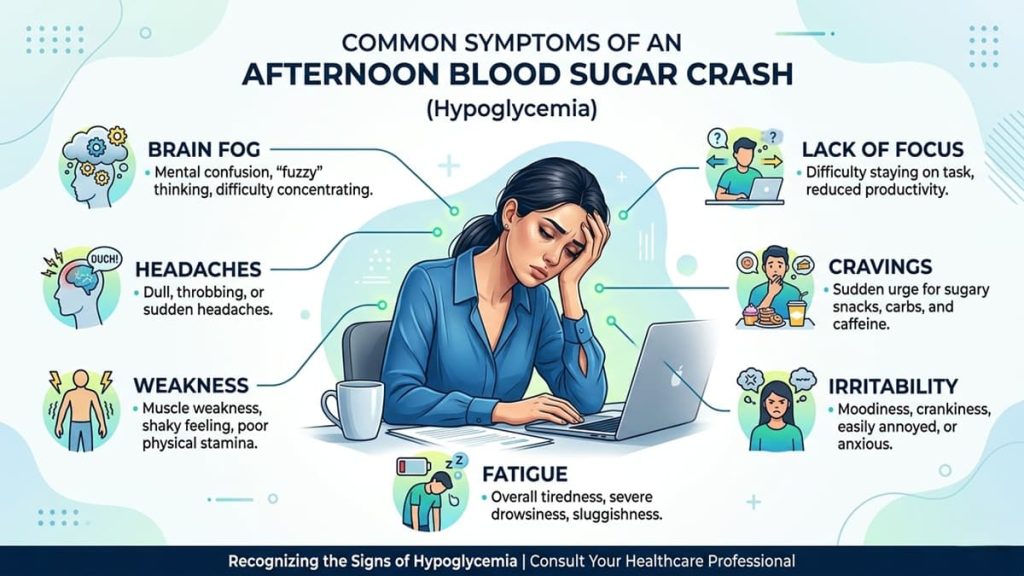
An afternoon blood sugar crash is a sudden drop in energy, focus, or mood that often occurs between lunch and dinner. Many people experience it as the classic “afternoon slump” that hits around 2 PM to 4 PM. While it may seem like a normal part of the day, it can sometimes be linked to fluctuations in blood sugar levels.
When you eat foods high in refined carbohydrates or added sugars, your blood sugar can rise quickly. In response, your body releases insulin to help move glucose from your bloodstream into your cells. If blood sugar rises and falls too rapidly, you may be left feeling tired, hungry, and craving more sugary foods shortly afterwards.
Common Signs of a Blood Sugar Crash
The symptoms can vary from person to person, but some of the most common signs include:
- Sudden fatigue or low energy
- Brain fog and difficulty concentrating
- Increased hunger, especially for sweets
- Irritability or mood changes
- Headaches
- Feeling shaky or weak
- Lack of motivation or productivity
These symptoms don’t always mean you have diabetes or a blood sugar disorder. However, frequent crashes may indicate that your body is struggling to maintain stable blood sugar levels throughout the day.
Why Blood Sugar Fluctuations Affect Energy Levels
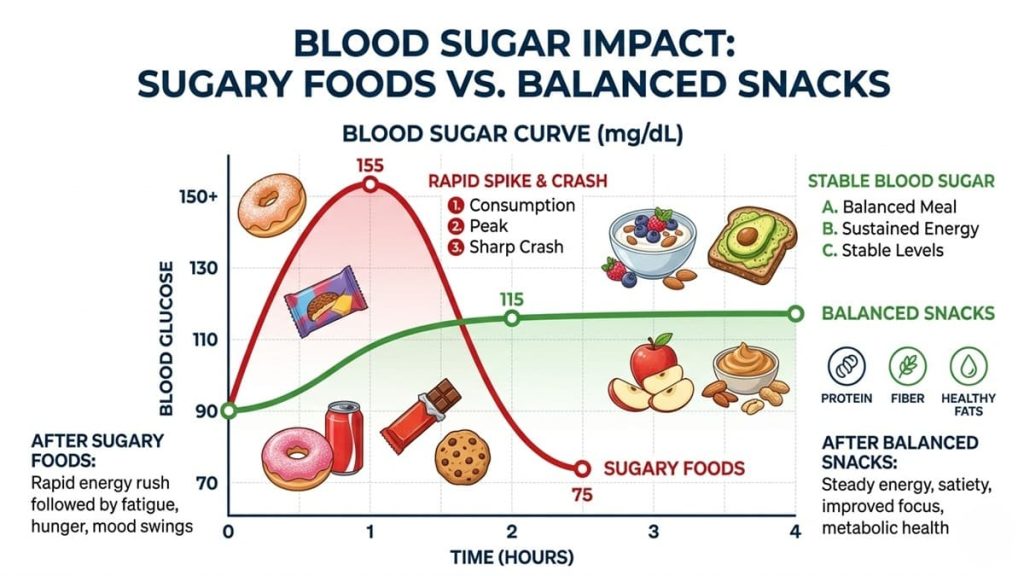
Your body relies on glucose as its primary source of energy. When blood sugar levels remain relatively stable, energy tends to feel more consistent. However, when levels spike and then drop quickly, your energy supply can become less predictable.
Think of it like a campfire. Adding a small amount of wood steadily helps the fire burn consistently. Throwing a pile of dry paper onto the fire creates a quick burst of flames that burns out just as fast. Similarly, foods that cause rapid blood sugar spikes can lead to temporary energy boosts followed by noticeable crashes.
Understanding this connection is the first step toward choosing foods and habits that support steadier energy throughout the day.
Why Afternoon Blood Sugar Crashes Happen
If you have ever felt energised after lunch only to struggle with fatigue a few hours later, there is usually a reason behind it. Afternoon blood sugar crashes rarely happen out of nowhere. More often, they are the result of daily habits that cause blood sugar levels to rise and fall too quickly. Understanding these common triggers can help you make simple changes that support steadier energy throughout the day.
Eating Too Many Refined Carbs at Lunch
A lunch loaded with refined carbohydrates can set the stage for an afternoon energy slump. Foods like white bread, pastries, chips, sugary drinks, and many fast-food meals are digested quickly, causing blood sugar levels to rise rapidly.
Your body responds by releasing insulin to move glucose into your cells. When this process happens too aggressively, blood sugar levels can drop soon afterwards, leaving you tired, hungry, and craving another quick source of energy.
Skipping Protein and Healthy Fats
Protein and healthy fats help slow digestion and promote a more gradual release of glucose into the bloodstream. When meals contain mostly carbohydrates and very little protein or fat, blood sugar is more likely to fluctuate.
For example, a lunch of white rice and a sugary drink may lead to a faster energy crash than a meal that includes lean protein, vegetables, and healthy fats.
Long Gaps Between Meals
Going too many hours without eating can also contribute to low energy and increased hunger. As your body uses up available fuel, blood sugar levels may begin to decline, especially if your previous meal wasn’t well-balanced.
This often leads to intense cravings and poor snack choices later in the day, creating a cycle of spikes and crashes.
Poor Sleep and Chronic Stress
Food isn’t the only factor that affects blood sugar. Poor sleep and ongoing stress can influence hormones that help regulate glucose levels.
When you are stressed or sleep-deprived, your body may produce more cortisol, a hormone that can affect blood sugar control and appetite. Over time, this can make energy levels feel less stable and increase the likelihood of afternoon fatigue.
The encouraging news is that many of these triggers are manageable. By improving meal quality, eating at regular intervals, prioritising sleep, and managing stress, you can reduce blood sugar fluctuations and enjoy more consistent energy throughout the day.
What Makes a Snack Blood Sugar-Friendly?
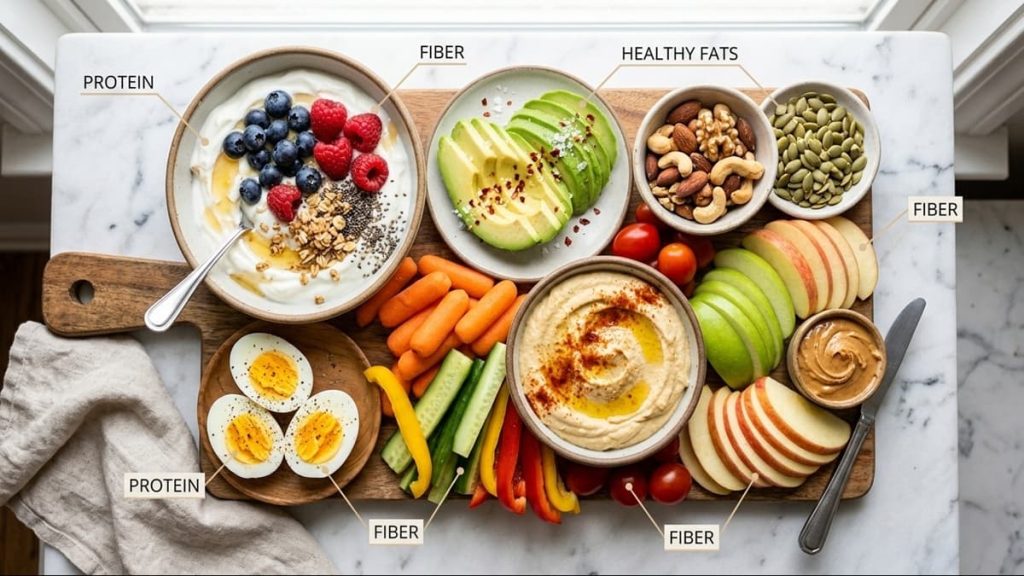
Not all snacks are created equal. Some provide a quick burst of energy followed by a crash, while others help keep blood sugar levels more stable and support steady energy for hours. If you are trying to prevent afternoon blood sugar crashes, choosing the right type of snack can make a noticeable difference.
A blood sugar-friendly snack typically combines protein, fibre, and healthy fats while limiting added sugars and highly refined carbohydrates. This combination helps slow digestion, reduce sudden blood sugar spikes, and keep you feeling satisfied between meals.
Protein Helps Slow Digestion
Protein is one of the most important nutrients for blood sugar balance. It slows the rate at which food is digested and absorbed, helping glucose enter the bloodstream more gradually.
Protein-rich snack options such as Greek yoghurt, eggs, cottage cheese, or nuts can help curb hunger and provide longer-lasting energy.
Fibre Supports More Stable Glucose Levels
Fibre plays a key role in slowing the absorption of sugar from food. This helps reduce sharp increases in blood sugar and may support better glucose control throughout the day.
Foods like berries, apples, vegetables, chia seeds, and legumes are naturally rich in fibre and make excellent additions to healthy snacks.
Healthy Fats Improve Satisfaction
Healthy fats help increase feelings of fullness and can work alongside protein and fibre to support more balanced energy levels.
Examples include avocado, nuts, seeds, and natural nut butters.
Why Portion Size Still Matters
Even healthy snacks can contribute to blood sugar fluctuations if portions become excessive. The goal is to provide enough fuel to bridge the gap between meals without overeating.
As a simple rule, look for snacks that include:
✔ A source of protein
✔ A source of fibre
✔ Healthy fats
✔ Minimal added sugar
This balanced approach can help you stay energised, satisfied, and better equipped to avoid afternoon blood sugar crashes.

15 Blood Sugar-Friendly Snacks for Steady Energy
When afternoon hunger strikes, the snack you choose can either support stable energy or contribute to another blood sugar crash. The best blood sugar-friendly snacks combine protein, fibre, and healthy fats to help slow digestion and provide more sustained fuel. Here are 15 simple options worth adding to your routine.
1. Apple Slices with Peanut Butter
Apples provide fibre, while natural peanut butter adds protein and healthy fats. Together, they create a satisfying snack that can help reduce cravings and keep you feeling full longer.
2. Greek Yoghurt with Chia Seeds
Plain Greek yoghurt is rich in protein, and chia seeds add fibre and healthy fats. This combination can help support more balanced blood sugar levels while also promoting digestive health.
3. Hard-Boiled Eggs and Vegetables
Hard-boiled eggs are packed with protein, while vegetables such as cucumber, bell peppers, or carrots provide fibre and nutrients. It’s a simple, portable snack that supports steady energy.
4. Mixed Nuts
Almonds, walnuts, pistachios, and cashews offer a combination of healthy fats, protein, and fibre. A small handful can help satisfy hunger without causing rapid blood sugar spikes.
5. Cottage Cheese and Berries
Cottage cheese is high in protein, and berries are naturally lower in sugar than many fruits while providing valuable fibre and antioxidants.
6. Hummus with Carrot Sticks
Hummus contains plant-based protein and healthy fats, while carrots contribute fibre and crunch. This pairing can be both filling and nutritious.
7. Avocado on Whole Grain Crackers
Avocados provide heart-healthy fats and fibre. When paired with whole-grain crackers, they create a balanced snack that may help support more consistent energy levels.
8. Roasted Chickpeas
Roasted chickpeas are rich in fibre and plant protein, making them an excellent alternative to highly processed snack foods like chips or crackers.
9. Cheese and Apple Slices
The protein and fat found in cheese can help slow the digestion of carbohydrates from the apple, supporting a steadier release of energy.
10. Edamame
Edamame is a nutrient-dense snack that provides protein, fibre, vitamins, and minerals. It is filling, easy to prepare, and suitable for many eating styles.
11. Tuna and Cucumber Bites
Cucumber slices topped with tuna create a refreshing, protein-rich snack. This option is particularly helpful for those looking to increase protein intake without adding excessive carbohydrates.
12. Pumpkin Seeds
Pumpkin seeds contain healthy fats, protein, fibre, and important minerals. A small serving can be a convenient way to support satiety between meals.
13. Protein Smoothie
A well-balanced smoothie can be an excellent choice when you are short on time. Consider blending unsweetened milk, protein powder, spinach, berries, and chia seeds for a nutrient-rich snack.
When choosing a protein powder, look for products with minimal added sugar and transparent ingredient lists. This is also a natural place to consider recommending a high-quality protein supplement if it aligns with your affiliate strategy.
14. Dark Chocolate and Almonds
If you are craving something sweet, a small portion of dark chocolate paired with almonds can be a more balanced option than candy or sugary desserts. The almonds help provide protein and healthy fats, while dark chocolate offers a rich flavour that many people find satisfying.
15. Blood Sugar Support Snack Bars
Not all snack bars are created equal. Many contain large amounts of added sugar that can contribute to energy crashes. However, some bars are formulated with higher amounts of protein and fibre while keeping sugar content lower.
When shopping for a blood sugar-friendly snack bar, look for options that provide:
- At least a moderate amount of protein
- Several grams of fibre
- Minimal added sugar
- Recognizable ingredients
This can also serve as a natural opportunity to recommend carefully selected affiliate products that meet these criteria.
A Quick Reminder About Snacks
Even the healthiest snack cannot completely offset the effects of an overall unbalanced diet. These snack ideas work best when paired with nutritious meals, regular physical activity, adequate sleep, and healthy stress-management habits.
The goal isn’t to find a perfect snack. It’s to choose options that help you avoid dramatic blood sugar spikes and crashes while providing your body with steady, reliable energy. Start by trying a few of the options above and pay attention to how you feel afterwards. Many people discover that simple changes in their snack choices can make a noticeable difference in their afternoon energy, focus, and cravings.
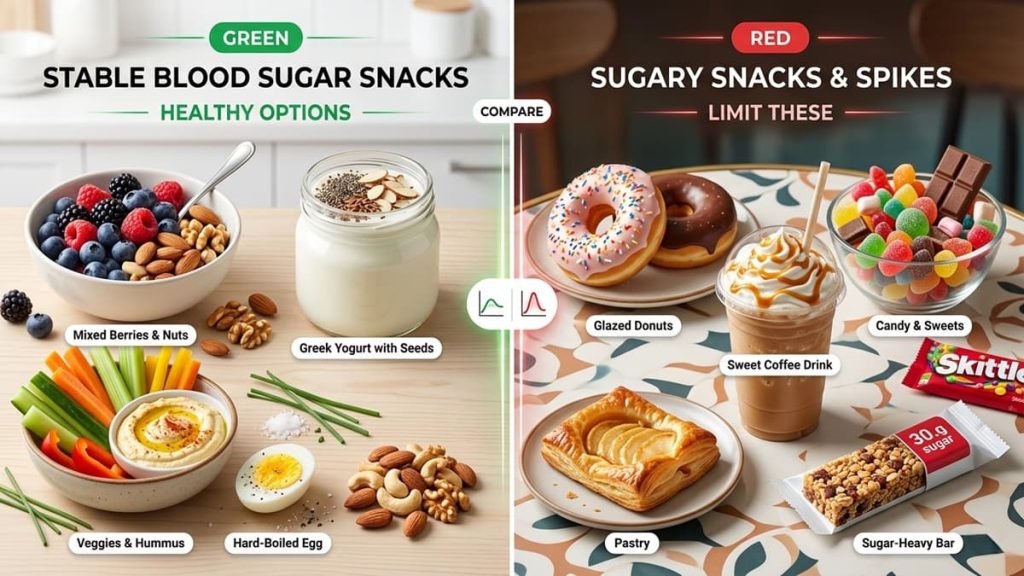
Snacks That May Trigger Blood Sugar Crashes
While some snacks help support stable blood sugar levels, others can do the opposite. Many popular convenience foods are high in added sugars, refined carbohydrates, or both. These foods may provide a quick burst of energy, but that boost is often short-lived and can be followed by fatigue, hunger, and cravings.
Understanding which snacks are more likely to trigger blood sugar spikes and crashes can help you make smarter choices throughout the day.
Granola Bars Loaded with Sugar
Many granola bars are marketed as healthy, but some contain as much sugar as a candy bar. Without enough protein or fibre to balance them out, they can cause blood sugar levels to rise and fall quickly.
Candy and Sweets
Candy, chocolates with high sugar content, and other sweets are rapidly digested, leading to a quick increase in blood sugar. Unfortunately, that temporary energy boost is often followed by an equally rapid crash.
Sweetened Yogurts
Yoghurt can be a nutritious snack, but flavoured varieties often contain significant amounts of added sugar. Choosing plain Greek yoghurt and adding fresh fruit is usually a better option for blood sugar control.
Pastries and Doughnuts
Pastries, donuts, and similar baked goods are typically made with refined flour and added sugars. This combination can contribute to sharp blood sugar fluctuations and leave you feeling hungry again soon after eating.
Sugary Coffee Drinks
Many speciality coffee beverages contain large amounts of sugar, flavoured syrups, and sweetened creamers. While they may seem like a solution for afternoon fatigue, they can actually worsen energy swings later in the day.
Whenever possible, choose snacks that provide protein, fibre, and healthy fats instead of relying on highly processed, sugar-heavy options.
Other Ways to Prevent Afternoon Energy Crashes

Choosing blood sugar-friendly snacks is an excellent start, but it’s only one piece of the puzzle. Your daily habits also play a major role in how stable your energy feels throughout the day. If you are dealing with frequent afternoon fatigue, a few simple lifestyle changes may help support more balanced blood sugar levels and reduce energy slumps.
Build Balanced Meals
The foundation of steady energy begins with your main meals. Aim to include a source of protein, fibre-rich carbohydrates, and healthy fats at breakfast and lunch. This combination helps slow digestion, promotes fullness, and supports a more gradual release of glucose into the bloodstream.
Stay Hydrated
Dehydration can sometimes mimic the symptoms of a blood sugar crash, including fatigue, headaches, and difficulty concentrating. Drinking enough water throughout the day can help support overall energy levels and normal body function.
Take a Short Walk After Lunch
A brief walk after eating may help your body use glucose more efficiently. Even 10 to 15 minutes of light movement can support digestion, improve circulation, and help reduce the sluggish feeling that often appears later in the afternoon.
Improve Sleep Quality
Poor sleep can affect hormones involved in hunger, appetite, and blood sugar regulation. Consistently getting enough quality sleep may help support more stable energy levels and reduce cravings for sugary foods during the day.
Manage Daily Stress
Chronic stress can contribute to blood sugar fluctuations by increasing the production of stress hormones such as cortisol. Activities like deep breathing, stretching, meditation, or spending time outdoors may help lower stress and support overall well-being.
When combined with healthy snack choices, these habits can go a long way toward helping you maintain steady energy and avoid afternoon blood sugar crashes.
Can Supplements Help Support Healthy Blood Sugar Levels?
While healthy meals, smart snack choices, regular exercise, quality sleep, and stress management should always form the foundation of blood sugar control, some people choose to add supplements to their overall wellness routine.
It’s important to remember that supplements are not a substitute for a balanced diet or medical treatment. However, certain ingredients have been studied for their potential to support healthy blood sugar levels when combined with healthy lifestyle habits.

Common Ingredients Often Used
Some of the most popular ingredients found in blood sugar support supplements include:
- Berberine: a plant compound often researched for its effects on glucose metabolism.
- Cinnamon Extract: commonly used to support healthy blood sugar management.
- Chromium: a mineral involved in carbohydrate metabolism and insulin function.
- Alpha-Lipoic Acid (ALA): an antioxidant that may help support metabolic health.
What to Look for in a Quality Supplement
If you are considering a blood sugar support supplement, look for products that provide transparent ingredient lists, appropriate dosages, and third-party quality testing. Avoid products that promise overnight results or sound too good to be true.
The most effective approach is usually a combination of healthy eating, consistent lifestyle habits, and evidence-based supplementation when appropriate.
When Should You Talk to a Healthcare Professional?
Occasional afternoon fatigue is common, especially after a busy day or a poor night’s sleep. However, frequent or severe blood sugar crashes shouldn’t be ignored.
Consider speaking with a healthcare professional if you regularly experience symptoms such as dizziness, shakiness, confusion, extreme fatigue, or intense hunger that interfere with your daily activities. It’s also a good idea to seek medical advice if your symptoms seem to be getting worse or if lifestyle changes aren’t helping.
In some cases, recurring energy crashes may be linked to underlying issues such as prediabetes, diabetes, insulin resistance, hormonal imbalances, or other health conditions that require proper evaluation.
A healthcare provider can help identify the cause of your symptoms and recommend appropriate testing, treatment, or lifestyle adjustments. Getting answers early can make it easier to manage your health and support more stable energy levels over the long term.
Frequently Asked Questions
What causes afternoon blood sugar crashes?
Afternoon blood sugar crashes are often caused by meals high in refined carbohydrates, long gaps between meals, poor sleep, stress, or a lack of protein and fibre in the diet.
What should I eat when my blood sugar drops?
Choose a balanced snack that contains protein, fibre, and healthy fats, such as apple slices with peanut butter, Greek yoghurt with chia seeds, or a handful of nuts.
Can blood sugar crashes happen if I don’t have diabetes?
Yes. Anyone can experience blood sugar fluctuations, especially after eating high-sugar foods or skipping meals.
Are bananas good for blood sugar control?
Bananas can be part of a balanced diet, particularly when paired with protein or healthy fats. Portion size and ripeness may influence their effect on blood sugar.
What foods help keep blood sugar stable?
Foods rich in protein, fibre, and healthy fats, such as eggs, legumes, nuts, seeds, vegetables, and plain yoghurt, can help support more stable blood sugar levels and steady energy.
Free Blood Sugar-Friendly Snack Guide
Looking for more simple ways to support stable blood sugar levels? Download our Free Blood Sugar-Friendly Snack Guide, featuring 25 easy snack ideas, a printable grocery list, and a 7-day energy tracker.
It’s designed to help you make smarter snack choices, reduce cravings, and maintain steadier energy throughout the day, without complicated meal plans or guesswork.
Conclusion: Small Snack Choices Can Make a Big Difference
Preventing afternoon blood sugar crashes doesn’t require a perfect diet or complicated nutrition plan. In many cases, the simple act of choosing more blood sugar-friendly snacks can help support steadier energy, fewer cravings, and better focus throughout the day.
Remember, the goal isn’t perfection, it’s consistency. Prioritising snacks that contain protein, fibre, and healthy fats can help reduce blood sugar spikes and crashes while supporting your overall health.
Start by testing a few of the snack ideas from this guide and see which ones work best for you. Small daily choices often lead to meaningful long-term results. And if you’d like additional support, be sure to download our free snack guide and explore other blood sugar management resources available on our site.
Related posts